

Identifying the origin of a health issue isn’t necessarily a matter of knowing where discomfort is felt. Think of two people: one has persistent headaches, while the other has recurring knee pain. They might need entirely different diagnostic assessments. Even when symptoms seem similar, the underlying causes can be very different.
Medical imaging helps physicians investigate these uncertainties by producing detailed images of anatomical structures that are not directly accessible for examination. The technology is only part of the equation. Selecting the correct imaging approach is no less important.
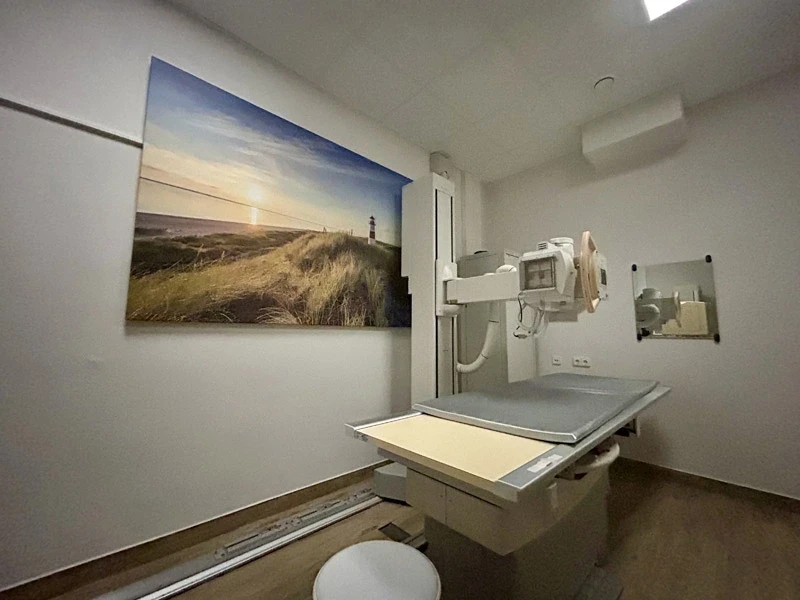
Individual patient care and modern imaging technology come together at the Diagnostic Radiology Center Wolfsburg in support of accurate examinations and well-informed medical decisions.
Different Questions Require Different Imaging Methods
Obtaining detailed information about soft tissues is one area where magnetic resonance imaging (MRI) is particularly useful. Without using ionizing radiation, MRI can help assess muscles, ligaments, joints, organs, and certain neurological structures.
Computed tomography, or CT, has a different role. When assessing bones, lungs, and a range of internal conditions, CT can be especially helpful because it produces cross-sectional images quickly. Exposure to radiation is a relevant factor when choosing an examination because CT relies on X-rays whereas MRI does not.
A range of bone and chest conditions can still be assessed with the help of digital radiography. Current imaging equipment can generate diagnostic images efficiently while using approaches designed to reduce avoidable radiation exposure. The most appropriate method depends on the clinical question, the patient’s medical history, and the referring physician’s assessment.
Clinical Questions That Need a More Specialized Approach
Specialized imaging may be necessary for certain medical questions. When assessing possible areas of concern in the prostate, multiparametric prostate MRI can assist in identifying suspicious regions and inform decisions on further investigation. MRI findings do not automatically confirm cancer, but it may supply valuable information for urological assessment.
Breast imaging also benefits from specialized technology. The technique called tomosynthesis, also known as 3D mammography, is available in addition to conventional mammography. It acquires multiple images at different angles to help radiologists assess overlapping tissue in the breast.
Without using ionizing radiation, whole-body MRI offers a wider anatomical view. The value of whole-body MRI depends on why it is medically indicated. It does not represent a universal alternative to established screening programs.
Imaging Can Also Guide Treatment
There is more to radiology than identifying abnormalities. CT-guided periradicular therapy can be considered in selected individuals dealing with nerve-related pain. Imaging during this procedure is to help guide the injection toward a specific nerve-root region. Click here to read more diagnostikzentrum radiologie Wolfsburg
Helping alleviate irritation or inflammation in appropriate cases is the aim of precisely directed treatment. The procedure must be considered in its clinical context. The decision depends on the patient’s symptoms, diagnosis, and clinical evaluation. For certain chronic conditions, the Wolfsburg center also offers radiation-based treatments. Appropriateness is evaluated for each individual.
Getting Ready for Imaging Before Arriving at the Center
Previous medical images can be surprisingly valuable. To help determine whether an abnormality is new or a change has existed for some time, radiologists can review medical images from different dates.
The Diagnostic Radiology Center Wolfsburg encourages arriving patients to have their health insurance card and referral, as well as any available previous imaging reports or scans. For appointments involving CT, MRI, or breast ultrasound, the center also asks patients to bring a large towel. When arranging an examination, patients should disclose relevant implants, pregnancy, kidney problems, allergies, or other medical concerns. This is particularly important when contrast agents or MRI safety requirements may apply.
Bringing Diagnostic Technology Together With Effective Patient Communication
Knowing what to expect during an imaging examination matters to patients, even when modern scanners can provide detailed images.
The Diagnostic Radiology Center Wolfsburg emphasizes organized appointments, understandable explanations, and respectful personal care. The center combines specialized imaging services with thoughtful preparation and communication. This supports patients in approaching diagnostic examinations more confidently and a clearer understanding of their medical care.