

You’re standing in the skincare aisle of a high-end department store, holding a $90 serum that promises to “revitalize” your complexion, and suddenly it hits you: you have no idea if these active ingredients actually do anything, or if you’re just paying for a heavy glass bottle and a scent designed by a perfumer.
It happens all the time. We spend hundreds on products that promise the moon but usually just offer a temporary hydration boost that vanishes the second you wash your face. That confusion comes from a massive gap between how products are marketed and how they’re actually formulated and sold.
The difference between what you find at a drugstore and what a dermatologist prescribes isn’t just about the price tag. It’s about how much of the active ingredients are in there, how stable those molecules are, and how deep they actually penetrate the epidermis.
If you want to stop wasting money on superficial fixes and actually address the biological drivers of aging and skin damage, you have to understand this gap.
The Surface Level: Where Cosmetics Live and Breathe
Cosmetic skincare is built for the immediate. It focuses on “surface-level beauty”—improving texture, adding moisture, or giving you a temporary glow using emollients and humectants. It’s an aesthetic experience. It’s about how a cream feels, how it smells, and how your skin looks for the first twenty minutes after you put it on.
These products are easy to find and highly regulated, but they don’t really aim to change your skin’s physiological structure. They’re great for maintaining a barrier or adding a protective layer, but they rarely reach the deeper layers where collagen production actually happens. If your goal is to feel hydrated and smell expensive, cosmetics are fine.
But if you’re dealing with deep hyperpigmentation, chronic acne, or significant loss of elasticity, relying only on cosmetics is like trying to fix a leaking pipe by repainting the wall. You might hide the damp spot for a while, but the structural issue is still there. That’s when the conversation shifts toward more intensive interventions.
A lot of people hit a plateau even with high-quality cosmetics. They feel like they’re doing everything right, cleansing, moisturizing, applying SPF, yet the visible signs of aging keep moving forward regardless of the expensive creams they layer on every night.
- Emollients: Smooth out the skin surface by filling gaps between cells.
- Humectants: Draw moisture into the upper layers of the skin.
- Occlusives: Create a physical barrier to prevent water loss.
- Fragrance: Enhances the sensory experience but adds zero biological value.
It’s a trade-off between instant gratification and long-term biological change. Most people end up somewhere in the middle, trying to balance both without breaking the bank.
The Biological Deep Dive: When Aesthetics Becomes Medicine
Medical aesthetics is a different beast because it moves away from treating only what you see on the surface and starts addressing root causes. Instead of just masking a wrinkle, medical-grade interventions aim to influence how skin functions at a cellular level. It’s about skin health and physiological response, not just “beauty.”
When we talk about medical aesthetics, we mean products with higher concentrations of actives like retinoids, vitamin C, and various acids. You’ll often find these in clinical settings rather than on a pharmacy shelf. Because they’re more potent, the formulation has to be precise so they actually penetrate the skin barrier instead of just sitting on top of it.
The options for professional-grade results are huge. There is a massive variety of brands engineered specifically for clinical use. For example, 8 trusted brands deliver real results for your clients and professionals, covering everything from deep hydration to intensive resurfacing. These brands are the backbone of professional esthetics because they have the potency that over-the-counter products lack.
It’s a different world of chemistry. You aren’t just looking for “moisture”; you’re looking for specific molecular weights that allow a peptide to reach the dermis. You’re looking for stabilized L-ascorbic acid that won’t oxidize the moment you open the bottle. It’s more complicated and more expensive, but it’s significantly more effective for serious concerns.
The transition from cosmetic to medical can be jarring. If you jump from a gentle, fragrance-heavy moisturizer to a high-strength medical retinoid without a transition period, your skin will likely react with redness, peeling, and irritation. These are tools that require respect. You can’t treat a clinical treatment like a casual skincare step.
If you’re working with a medical provider, you’ll likely encounter specialized distribution. Many practitioners rely on high-quality, regulated channels like Bavaria Pharma to ensure their inventory is legitimate. That level of oversight is why medical-grade results feel so different from the stuff you grab during a grocery run.
The Heavy Hitters: Brands That Rule the Clinic
If you walk into a dermatologist’s office or a high-end medical spa, you’re going to see certain names constantly. These aren’t just marketing buzzwords; these are brands that have undergone rigorous testing and often have the scientific backing to support their claims. If you’re serious about changing your skin’s actual composition, these are the names that dominate the conversation.
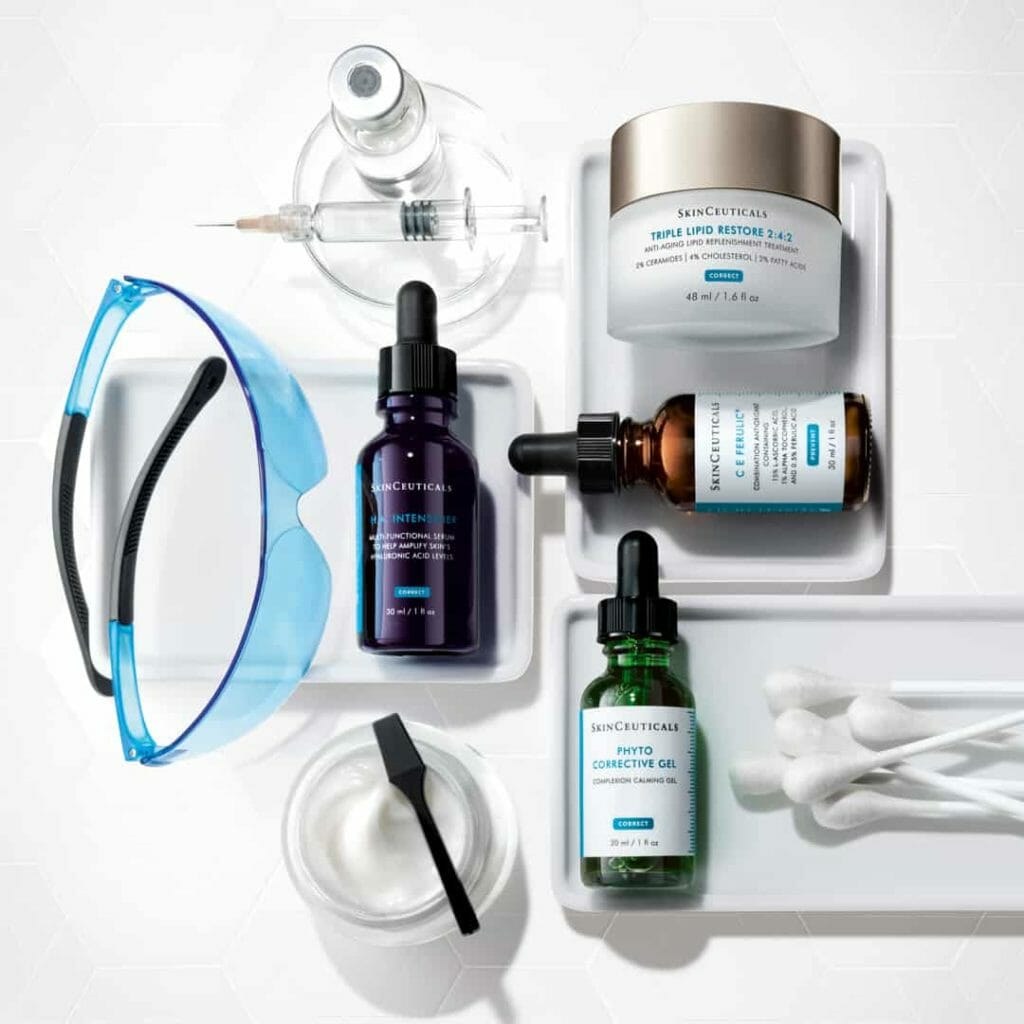
SkinCeuticals is probably the most recognizable name in medical skincare. They’re often the gold standard for antioxidant serums, especially their Vitamin C. They focus heavily on formula stability, which is the biggest hurdle for high-potency ingredients. If you want to prevent oxidative damage from UV rays and pollution, this is usually the first stop for clinicians.
SkinMedica and EltaMD are also at the top for good reason. SkinMedica focuses on growth factors and peptides to help rebuild the skin’s infrastructure. EltaMD is a frequent go-to for sun protection, offering mineral and chemical SPFs that are non-comedogenic and good for post-procedure skin. They aren’t trying to sell you a “glow”; they’re trying to protect your skin’s barrier.
This table compares how these tiers generally function in a routine:
| Feature | Cosmetic Skincare | Medical Grade Skincare |
|---|---|---|
| Primary Goal | Surface appearance & texture | Cellular change & repair |
| Active Concentration | Low to moderate | High and clinically tested |
| Availability | Retail/Drugstore/Department Store | Clinics/Dermatologists/Med Spas |
| Price Point | Variable (Low to High) | Generally High |
Then there are the “dupes” and affordable alternatives. Social media makes it easy to find products that mimic expensive growth factor serums without the $300 price tag. While those can be great for maintenance, they often lack the ingredient purity or the absorption rate of the top-tier medical options. You’re often trading efficacy for accessibility.
The choice depends on your skin. If you have a sensitive skin barrier, medical-grade products might be too aggressive. If you have deep wrinkles or melasma, cosmetics might feel like a waste of time. It’s a balance.
The Professional Edge: Esthetics and Advanced Technology
The rise of medical aesthetics has changed how we approach aging. We’re moving away from the idea that skincare is a passive process and toward an active, interventionist model. This includes advanced medical cosmetic treatments, like those offered by Mesoestetic, which use technologically advanced formulations to deliver results that topical creams simply can’t reach on their own.
Professional estheticians are the gatekeepers here. They bridge the gap between a casual consumer and a medical patient. A licensed professional can look at your skin and tell you if you actually need a high-strength acid or if you just need more lipids. They understand the chemistry of how ingredients interact, which is something most people never master on their own.
This professional oversight matters more as the market gets saturated with “medical-grade” claims that are really just clever marketing. Not every product that says “clinical” on the label is formulated to penetrate the skin’s layers. Seeking professional advice is often more cost-effective than buying ten different “miracle” creams that don’t work.
We’re also seeing a massive increase in aesthetic medical devices. From LED light therapy to microcurrent and laser resurfacing, the hardware is becoming just as important as the skincare software. When you combine a high-quality medical topical with a professional-grade device, the results are significantly better than either could achieve alone. It’s a multi-pronged approach.
The future of skincare is leaning toward this hybrid model. We’re seeing a convergence of dermatology and aesthetics that focuses on long-term skin integrity rather than temporary fixes. It’s a move toward science-backed, evidence-based beauty.
Stop guessing and start testing.
A few things readers ask
What are medical grade skincare products?
These are high-potency formulations containing active ingredients in higher concentrations than over-the-counter products, often prescribed or recommended by dermatologists.
What are some dermatologist-recommended brands for skin care?
Commonly recommended brands include CeraVe, La Roche-Posay, SkinCeuticals, and EltaMD due to their focus on clinical efficacy and skin barrier support.
What are aesthetic medical devices?
These are professional-grade technologies, such as lasers, radiofrequency, or microdermabrasion tools, used in clinical settings to improve skin texture and tone.
What are some good aesthetic cosmetic products?
Effective aesthetic cosmetics typically include hyaluronic acid serums, retinoids, vitamin C antioxidants, and broad-spectrum SPF to enhance skin health.
How do medical grade products differ from drugstore skincare?
Medical grade products often feature stabilized active ingredients and higher concentrations designed to penetrate deeper into the skin to treat specific concerns.