

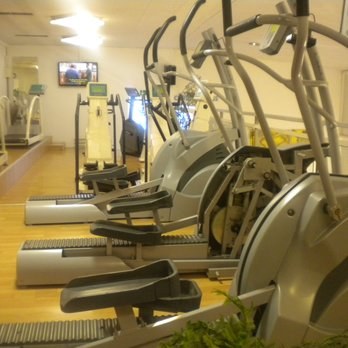
Most people think “fitness” means hitting a heavy barbell or running on a treadmill until their lungs burn. That approach is actually a fast track to injury if you already have a health condition. If you’re training through pain or trying to manage a chronic issue without professional guidance, you aren’t training; you’re just gambling with your joints. Real progress in Wuppertal isn’t about how much weight you can move, but how well your body actually functions during your daily commute or when you’re playing with your kids.
Wuppertal has a surprisingly specialized split between high-intensity social fitness and clinical, medical-grade rehabilitation centers. You need to decide whether you want a community of people sweating together or a supervised clinical environment designed to fix a specific physical deficit. These two worlds rarely overlap in the same building. Choosing the wrong one for your current physical state is a waste of time and money.
Can a gym actually be part of a medical prescription?
In many cities, fitness is treated as a luxury for people with nothing better to do on a Tuesday afternoon. But in Wuppertal, there’s a serious movement toward medical fitness, where exercise is treated as a clinical intervention. This is particularly relevant if you’re recovering from surgery or dealing with long-term inflammation. You aren’t just “working out”; you’re following a protocol designed to repair tissue.
If you go to a standard commercial gym with this mindset, you’ll likely end up frustrated or hurt. Trainers in a standard gym are often focused on aesthetics or performance, not your specific spinal alignment or your glucose levels. That’s why many people turn to Medical Fitness Wuppertal to bridge the gap between a doctor’s office and a traditional weight room. It’s a specific niche for those who need more than just a squat rack.
The goal here is stability and controlled movement. Instead of chasing a “pump,” the focus shifts to corrective exercises that address the imbalances caused by sitting at a desk or previous injuries. It’s a more deliberate, slower form of movement that prioritizes longevity over immediate intensity. It might feel boring at first, but it’s the only way to ensure you can still walk without pain ten years from now.
Medical fitness programs often operate on different schedules than the 24/7 “grind” culture gyms. For instance, if you look at the operating hours for some specialized centers, you might find they are more aligned with a professional workday, being open Monday through Friday from 10:00 to 22:00. This makes it harder for the “9-to-5” crowd to use them, but it creates a much more focused environment for people who are actually there for rehabilitation.
Is there a difference between “fitness” and “rehabilitation”?
The distinction is massive, yet most people use the terms interchangeably. Rehabilitation is about fixing what is broken, while fitness is about building what is already there. If you have a meniscus tear, you don’t need “fitness”; you need a structured plan to rebuild the supporting musculature around that joint without causing further damage. If you try to do a high-intensity interval training (HIIT) class with an active injury, you are essentially asking for a second injury.
Wuppertal offers a few distinct ways to approach this. Some facilities focus heavily on the clinical side, providing a controlled environment for people with specific metabolic needs. For example, specialized programs like Diabetessport in Wuppertal focus on helping individuals manage their glucose levels and overall stamina through movement. This is a very specific type of health management that a standard gym simply isn’t equipped to handle. This isn’t about looking good in a tank top; it’s about systemic health and metabolic stability.
Then there is the social side of movement, often found in the older, more historical parts of the city. The Schwimmoper is a great example of a place that has been part of the city’s fabric for a long time, offering a different kind of physical engagement through swimming and traditional gym activities. It’s a different vibe entirely, one that feels more communal and less clinical.
But you have to be honest with yourself about what you need right now. Are you trying to get stronger, or are you trying to stop hurting? If you’re the latter, you shouldn’t be looking at a standard gym’s promotional flyer. You should be looking for a facility that understands how to manipulate load and range of motion to facilitate healing rather than just causing more strain.
To help you decide, I have put together a quick comparison of the different “modes” of training you will find in the city. It isn’t an exhaustive list, but it covers the main categories of facilities available to residents.
| Type of Facility | Primary Goal | Who It Is For | Typical Vibe |
|---|---|---|---|
| Medical Fitness | Rehab and corrective movement | People with injuries or chronic issues | Quiet, focused, clinical |
| Social/Public Gym | General health and community | General population, swimmers | Social, bustling, traditional |
| EMS / High-Tech Studio | Time-efficient muscle activation | Busy professionals | High-tech, fast-paced, specialized |
| Specialized Disease Sport | Metabolic management | People with diabetes or similar needs | Supportive, educational, paced |
What about the high-tech “shortcuts” like EMS?
Electromyostimulation (EMS) divides the fitness world into two camps: those who think it is a miracle for busy people and those who think it is a gimmick. The idea is that you wear an electrode suit that sends electrical impulses to your muscles, allowing you to achieve high muscle activation in a fraction of the time it would take in a traditional gym. It is efficient, certainly, but efficiency is not always the same as effectiveness.
If you are a busy professional living in Wuppertal who only has 20 minutes to spare, an EMS session at a place like Vitalkraft could be a game changer for maintaining muscle mass. It’s a very different sensation from lifting a dumbbell; you feel a deep, intense contraction that you simply cannot replicate through traditional movement alone. But it doesn’t replace the need for functional, real-world movement.
And while the technology is impressive, it doesn’t magically fix a bad posture or a weak core. You can have the most advanced electrical stimulation in the world, but if you don’t move your body through space in a way that makes sense for your skeleton, you’ll still be a “fit” person with a bad back. It is an additive tool, not a replacement for foundational movement.
I have seen people spend hundreds of euros on EMS training while still struggling with basic mobility. It’s like putting a racing engine in a car with a bent frame. You might go fast in a straight line, but the second you try to turn a corner, everything starts rattling and breaking. Use the tech to supplement your strength, but don’t expect it to do the heavy lifting of structural health for you.
Where can I find a balance between sweat and recovery?
Once you’ve moved past the “medical” phase and are no longer in acute pain, you probably want to transition into something that feels more like a lifestyle. This is where the distinction between a “gym” and a “wellness center” becomes important. If you find that high-intensity training leaves you feeling completely depleted and sore for three days, you might need a different approach to recovery.
Some locations in Wuppertal seem to understand this better than others. For example, looking at the Sport-Saunatorium, you see a model that integrates physical fitness with the concept of recovery. It’s a more holistic way of looking at the body, acknowledging that what you do *after* the workout is just as important as what you do during it. The sauna and the steam room aren’t just luxury add-ons; they are tools to help the nervous system settle down after a hard session.
Then there is the matter of data. We live in an era where people are obsessed with their stats, their heart rate variability, and their body fat percentages. Some studios, like Terra Sports, offer things like free trial training sessions that include body analysis. This is a double-edged sword. On one hand, having data is great for tracking progress. On the other, you can become so obsessed with the numbers on a screen that you ignore how your body actually feels.
But the numbers don’t lie, and sometimes they reveal things that our ego tries to hide. You might feel like you are working hard, but the body composition analysis might show that you are actually gaining fat while losing muscle, which is a sign that your training program is misaligned with your nutrition. Use the data as a compass, not as a judge. If the machine says you are doing great but your knee is throbbing, trust the knee.
The “best” gym in Wuppertal doesn’t exist in a vacuum. The best gym for you is the one that matches your current physiological needs. If you are healing, go medical. If you are busy, go EMS. If you are training for life, go for a mix of strength and recovery.
Stop looking for the most expensive facility and start looking for the one that addresses the specific physical problem you are trying to solve.
Quick answers
What services does a sports medicine fitness studio in Wuppertal offer?
These studios provide medically supervised training, injury rehabilitation, and specialized strength programs tailored to individual health needs.
Can I use a sports medicine fitness studio for injury recovery?
Yes, they specialize in rehabilitation exercises designed to accelerate healing and prevent future injuries through professional guidance.
Who should visit a sports medicine fitness studio instead of a regular gym?
Individuals recovering from surgery, managing chronic pain, or those requiring personalized medical oversight for high-performance training should choose a sports medicine studio.
Is medical supervision included in the training sessions?
Most specialized studios in Wuppertal offer sessions supervised by sports scientists or physiotherapists to ensure safety and effectiveness.
Do I need a doctor's referral for a sports medicine fitness studio in Wuppertal?
While not always mandatory, a referral can help tailor your specific medical requirements to your customized training plan.